When can babies start eating solids?
Readiness Signs, First Foods & Safe Introduction
Wondering when to start solids? You’re not alone, and the answer is more about readiness than a random date on the calendar. This guide walks you through the most widely used guidelines, the signs your baby is ready, how to start (purées or baby-led weaning), and safety basics, without pressure or judgment.
Free First Foods Chart (PDF): what to offer from ~6–12 months + texture progression.
Download:
Download the First Foods Chart →
Quick answer: most babies start solids at about 6 months
Major public health guidance commonly says babies can begin complementary foods at about 6 months, and introducing foods before 4 months is not recommended. Every baby is different—look for developmental readiness signs and check with your pediatrician if you’re unsure (especially if baby was premature or has medical needs).
Signs your baby is ready for solids
Readiness matters more than age alone. Many guidelines suggest solids when baby can:
- Sit up with support and maintain good head/neck control
- Bring objects/food toward their mouth (hand-to-mouth coordination)
- Show interest in food (watching you eat, opening mouth for spoon)
- Move food to the back of the mouth and swallow (less tongue-thrust)
Purées vs baby-led weaning (BLW): what’s best?
There isn’t one perfect method—choose what fits your baby and your comfort level.
Option 1: Purées (traditional spoon-feeding)
- Start smooth, then move to thicker textures as baby handles it.
- Practice responsive feeding: baby sets the pace, you offer calmly.
Option 2: Baby-led weaning (finger foods)
- Baby self-feeds soft, graspable pieces from the start.
- Works best when baby can sit well and you can closely supervise.
Option 3: A flexible mix (what most parents do)
Many families combine purées and finger foods. The main goal is exposure to a variety of tastes and textures, at a pace that’s safe and enjoyable.

First foods: what to start with
Start simple and focus on nutrient-dense foods. Many guides encourage early inclusion of iron-rich foods because iron needs increase around this stage. Great first options include:
- Soft cooked vegetables (mashed or as soft sticks)
- Avocado, banana, ripe pear
- Iron-fortified infant cereal (as appropriate)
- Soft meats (shredded), lentils/beans (well-cooked and mashed)
- Plain yogurt (if appropriate for your baby; ask your clinician if unsure)
Common challenges (and what to do)
Gagging vs choking
Gagging can be common as babies learn textures; choking is an emergency. Learn the difference, always supervise, and keep foods soft and appropriately sized. If you’re doing BLW, take a CPR/first aid refresher if possible.
Constipation
It can happen when solids begin. Offer water with meals (if your pediatrician approves), focus on fiber foods (pear, prune, peas), and keep milk feeds steady.
Not interested in food
Totally normal at first. Early solids are about learning, not volume. Keep it low-pressure and try again.
Safety: quick checklist
- Baby sits upright and is supervised 100% of the time
- Avoid choking hazards (whole nuts, hard chunks, grapes, popcorn)
- Serve nut products safely (thinly spread/thinned; never whole nuts) and follow your pediatrician’s allergy guidance
- Keep honey off the menu until after 12 months (common public health advice)
Keep Closer resources:
How carriers help with feeding on-the-go
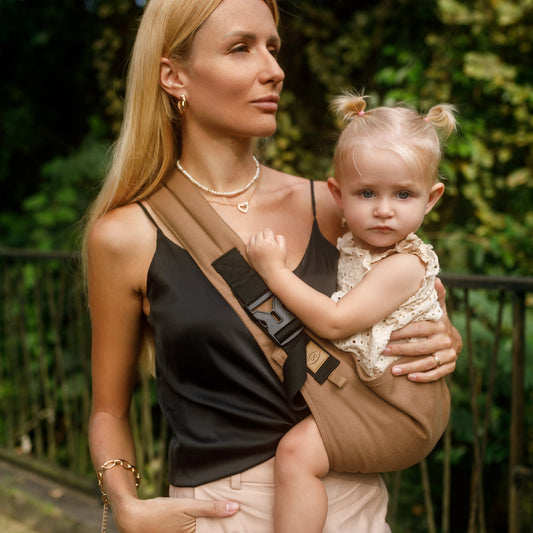
Feeding doesn’t always happen at home. Carriers can make life easier when you’re out, supporting baby close to you while you handle bottles, snacks, or soothing between feeds. Many parents also find babywearing helpful for keeping baby calm and regulated before and after meals.
Natural bridge: If you’re juggling feeds, naps, and errands, a supportive carrier helps you keep baby close while freeing your hands, especially during the “solids transition” months.
When to consult your pediatrician
- If your baby was premature or has medical needs
- If you’re concerned about swallowing, choking, reflux, or growth
- If you have questions about allergens or family allergy history
- If you’re unsure about readiness signs
Download the First Foods Chart (PDF)
Includes: texture progression + meal rhythm from ~6–12 months.
References (evidence-aware):
CDC – When, What, and How to Introduce Solid Foods (about 6 months; not before 4 months)
NHS – Your baby’s first solid foods (around 6 months)
HealthyChildren.org (AAP) – Starting Solid Foods
Google Trends – “when to start solids” (view interest over time)